Christ the Redeemer Ticket via Corcovado Train
- Entry ticket
- Mobile voucher
- Valid same day
- Free cancellation
Christ The Redeemer Tickets — Corcovado Van Access & Guided Entry
Thirty metres of soapstone above the bay, arms open to the Atlantic.
Compare fares, pick the fit — all bookings are mobile-voucher and eligible for free cancellation where shown.
9 hr
8 hr
| Experience | Duration | Rating | Pickup | Skip-the-line | Guide | Free cancel. | Price | |
|---|---|---|---|---|---|---|---|---|
|
Standard Entry
Most popular
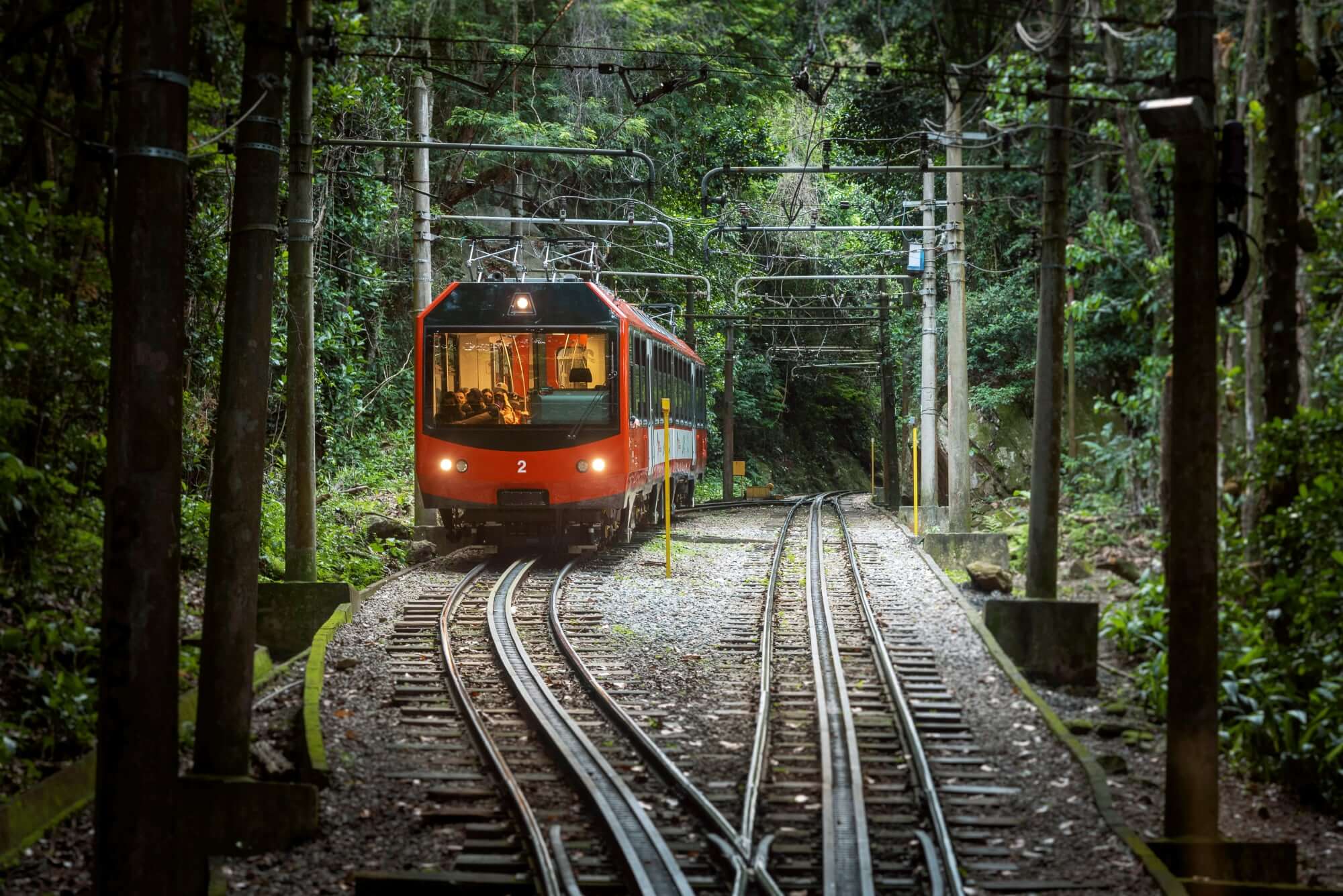
Christ the Redeemer Ticket via Corcovado Train
|
Duration varies with waiting times | ★ 4.4 | — | — | — | ✓ | €42 | Book → |
|
Guided Experience
Rio Full-Day Tour: Christ the Redeemer, Sugarloaf, Selarón Steps & BBQ Lunch
|
9 hr | ★ 4.5 | ✓ | ✓ | ✓ | ✓ | €65 | Book → |
|
Guided Experience
Rio de Janeiro 6-Stop Highlights Tour with Lunch
|
8 hr | ★ 4.4 | ✓ | ✓ | ✓ | ✓ | €114 | Book → |
Worth it for first-timers, weather permitting
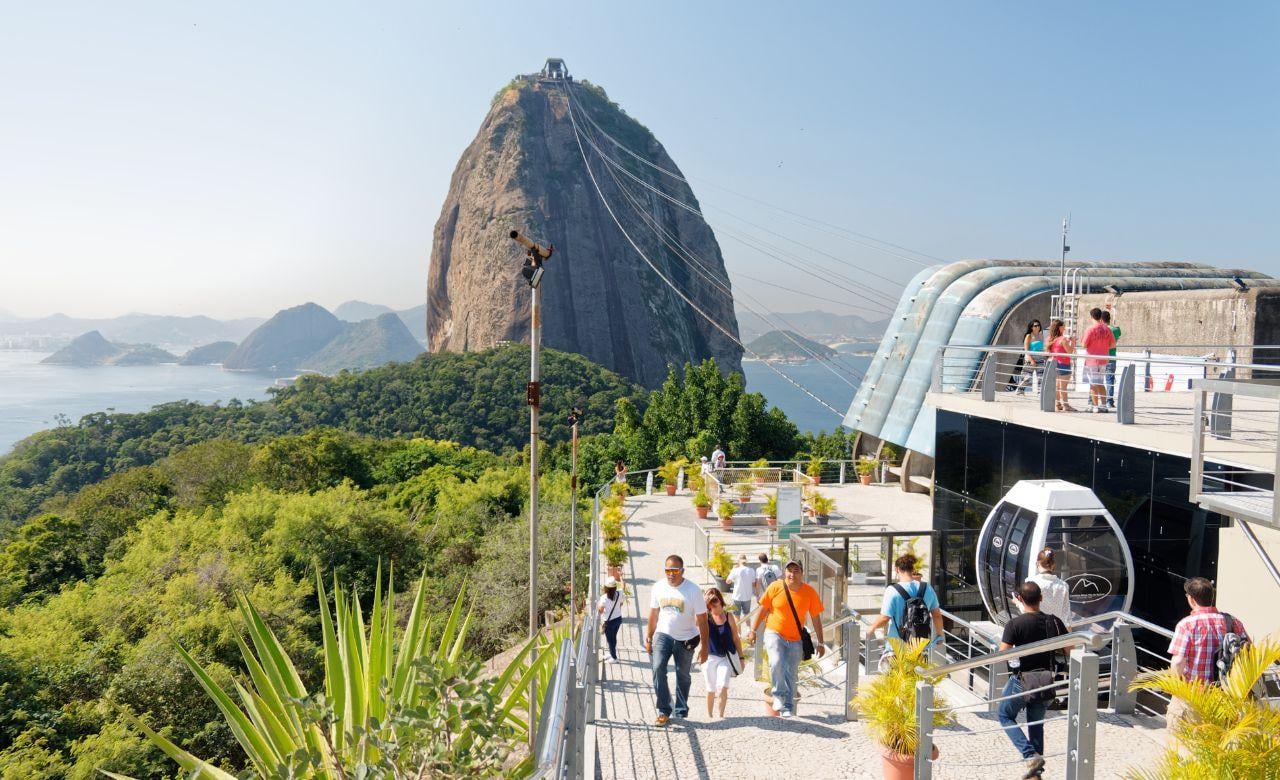
At 76 BRL for an adult van ticket including transport in low season, Christ The Redeemer Tickets sit at the cheap end of major world landmarks — roughly the price of a decent lunch in Ipanema, and that fare covers the ride up through Tijuca Forest as well as entry to the terrace. What you get is a 30-metre soapstone Art Deco figure at arm's length and a 360-degree panorama over Guanabara Bay, Sugarloaf, Copacabana and the Maracanã. The catch is cloud: Corcovado sits at 710 metres and disappears into mist regularly, and no refund follows a whiteout. Ingressos Cristo Redentor pay off for first-time visitors and anyone who wants the geography of Rio to click into place. Skip it if you've already seen the summit, or if the forecast is grey — the same money buys a Sugarloaf cable car with more reliable visibility.
Bottom line: Check the Corcovado webcam first, then book Christ The Redeemer Tickets for a clear morning — on a blue-sky day it is among the best-value Rio landmarks going.
Hand-picked experiences loved by thousands of travelers
6 hours
Free Cancellation
See Rio's icons in one afternoon — Christ the Redeemer, Selarón Steps and a Sugarloaf sunset.
9 hours
Free Cancellation
A full day exploring Rio's icons — Christ the Redeemer, Sugarloaf Mountain, and a hearty buffet lunch.
5 hours
Free Cancellation
Skip the crowds at Christ the Redeemer, then ride the cable car up Sugarloaf Mountain.
3 hours
Round-trip van transport to Christ the Redeemer, with entry included and hassle-free hotel pickup from Copacabana.
5 hours
Free Cancellation
See Rio's two icons in one morning — Christ the Redeemer and Sugarloaf's cable car views.
25-30 minutes
Free Cancellation
Soar above Rio's beaches, Christ the Redeemer, and Sugarloaf Mountain on a 30-min helicopter flight.
6 hours
Free Cancellation
Beat the crowds with a pre-dawn Rio adventure to a sunrise viewpoint, Christ the Redeemer, and Selarón Steps.
4 hours
Free Cancellation
Skip the crowds on a private guided trip to Christ the Redeemer via the Tijuca Forest train.
You start at Paineiras, where the vans depart, and the ride costs 76 BRL per person for an adult van ticket in low season. Arrive between 07:30 and 09:00 — the gates open at 07:20 daily, and the early window brings fewer crowds and softer light before midday tour groups arrive.
Bring the confirmation on your phone; the barrier scanners read it directly.
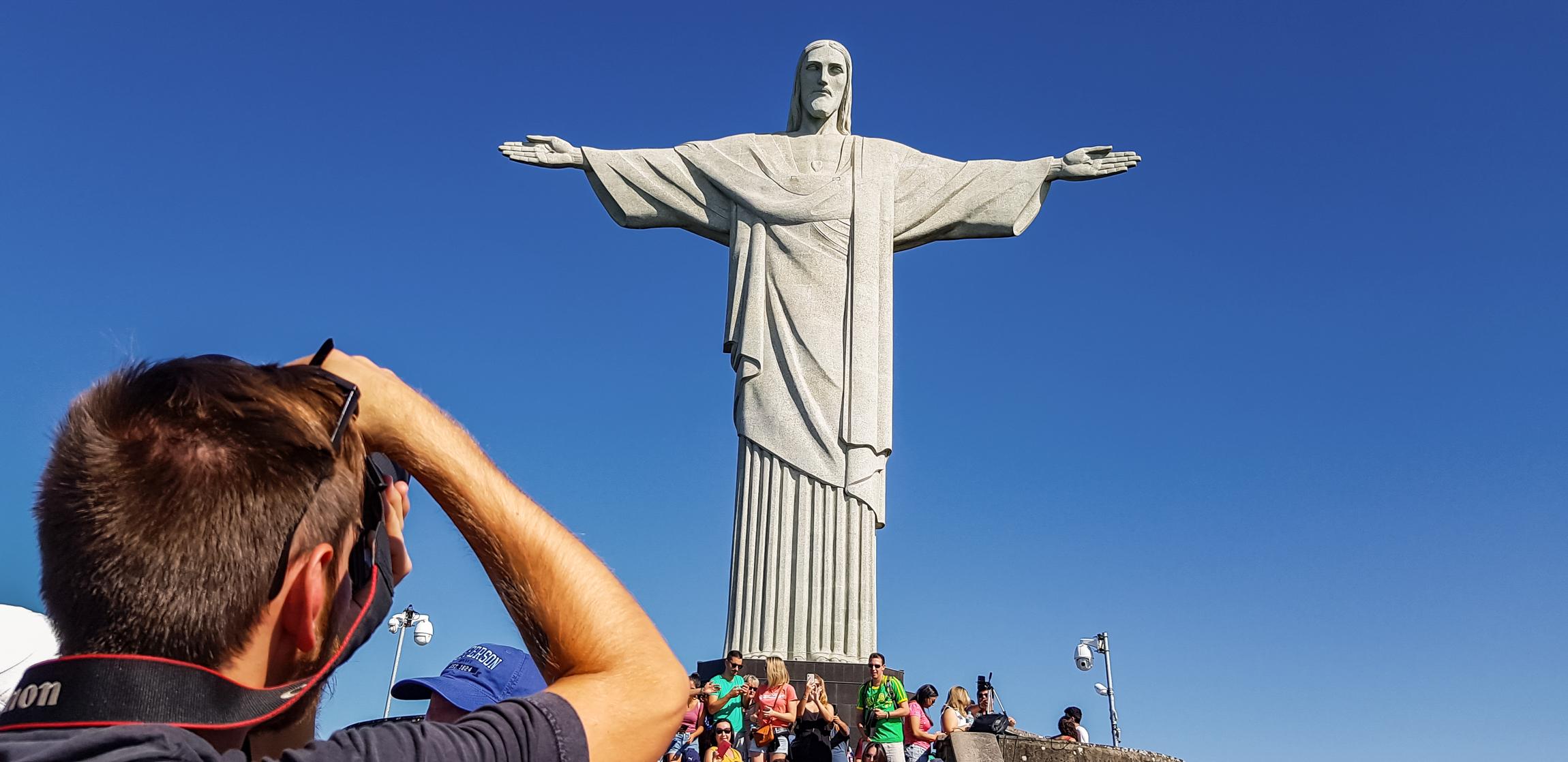
The van climbs through Tijuca forest in switchbacks, windows down, engine low. You feel the temperature drop several degrees. At the upper platform you transfer to escalators and lifts, or take the panoramic stairway if you want the approach on foot. Then the terrace opens and the statue is directly overhead, foreshortened, far larger than photographs suggest.
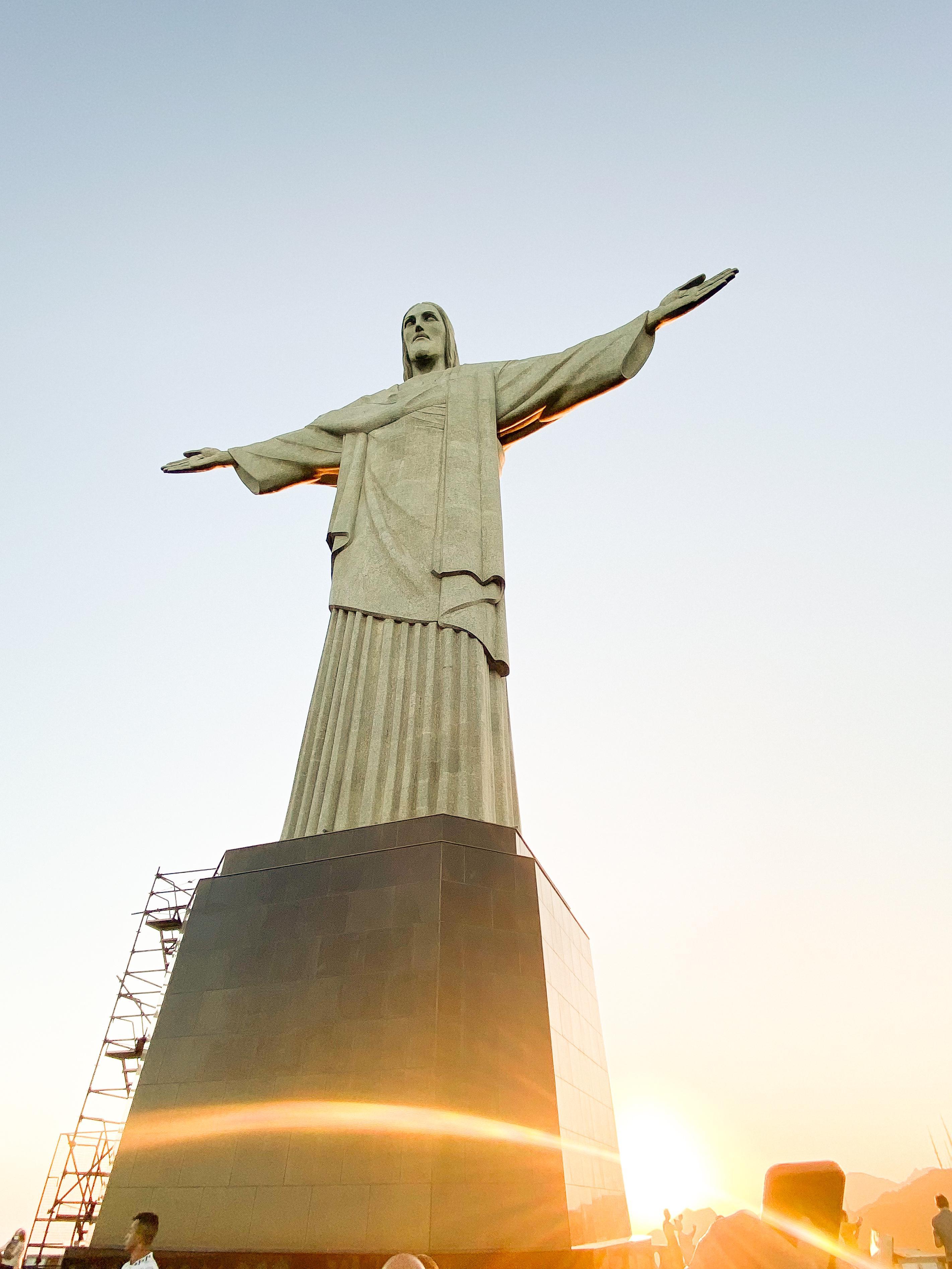
You walk the platform's perimeter first. Sugarloaf sits to the east, the lagoon below to the south, Guanabara Bay opening north. You lie on your back near the railing — everyone does — to fit the full 30 metres into a frame. Later you step down to the chapel beneath the pedestal, where the noise drops away completely. A Christ The Redeemer Tickets tour usually allows enough time at the summit to do both without hurrying. You leave when the light hardens, and the descent takes you back through the same green corridor.
All the details about your upcoming adventure in one place
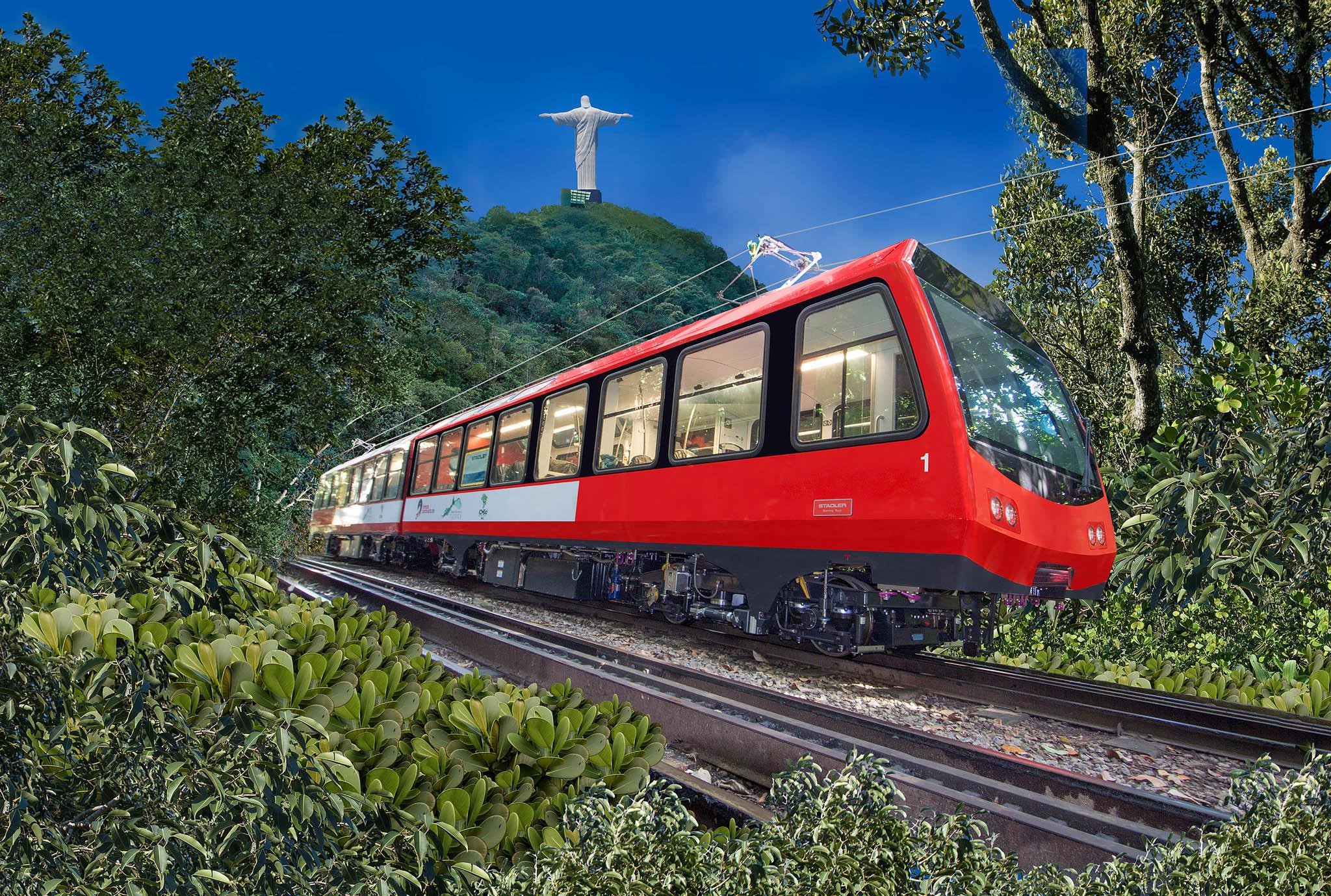
Christ The Redeemer Tickets cover entry to the art deco statue crowning Corcovado mountain inside Tijuca National Park, reached by the cog train or authorized van up the forested slope. The soapstone monument, designed by Heitor da Silva Costa and sculpted with help from Paul Landowski, opened in 1931 and now anchors most Rio de Janeiro landmarks itineraries. Cristo Redentor ingressos and skip-the-line Christ The Redeemer Tickets tours both lead to the same viewing terraces over Guanabara Bay, Sugarloaf and the Atlantic forest below.
The statue's outstretched arms measure 28 metres tip to tip, and every square centimetre of its surface is clad in triangular tiles of pale Swedish soapstone, laid by hand like mosaic. Visitors buying Christ The Redeemer Tickets rarely register that scale from below. It only registers at the summit.
The monument crowns Corcovado, a granite peak rising 710 metres inside Tijuca National Park, the reforested urban woodland that separates Rio's northern districts from its southern beaches. French sculptor Paul Landowski modelled the figure in Paris; Brazilian engineer Heitor da Silva Costa resolved the structure in reinforced concrete; Romanian artist Gheorghe Leonida shaped the head and hands. The result was inaugurated in 1931 and has since become the visual shorthand for the city itself, named among the New7Wonders of the World in 2007 and standing inside a UNESCO World Heritage cultural landscape.
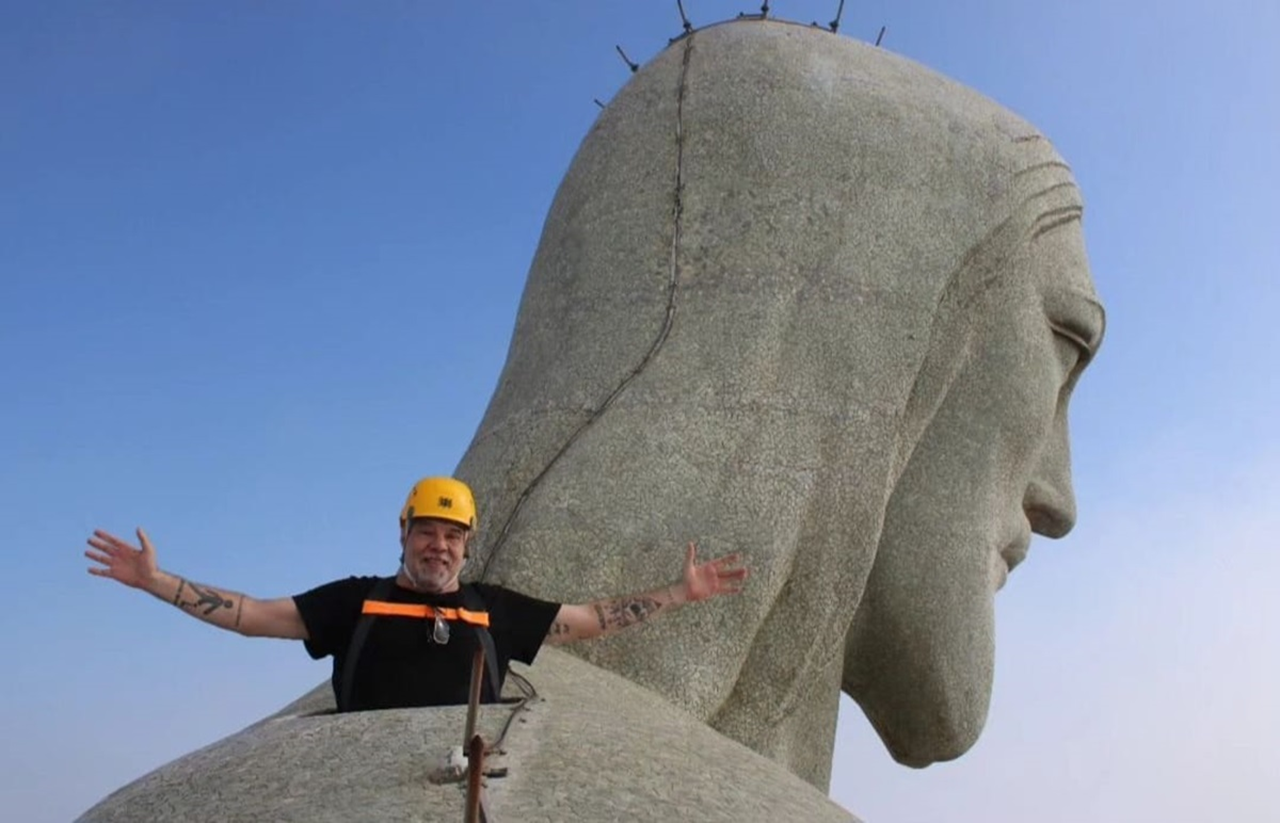
Architecturally, the work sits at an unusual junction. Its silhouette is Art Deco — geometric, flattened, deliberately stylised — while its function is devotional. The robe falls in planar folds rather than naturalistic drapery. The face carries no expression that resolves into either welcome or judgement, which is precisely why photographers return to it in every light. Beneath the pedestal, a small chapel dedicated to Nossa Senhora Aparecida was consecrated in 1965 and still hosts services, a reminder that the site functions as sanctuary as much as viewpoint. Lightning strikes the figure repeatedly each year; conservation teams keep reserves of the original soapstone quarried near Ouro Preto for repairs.
What sustains the monument's relevance is the vantage it commands. From the terrace at Estrada das Paineiras, S/N, the entire geography of Rio de Janeiro resolves in a single sweep: Sugarloaf Mountain, Guanabara Bay, the Rodrigo de Freitas lagoon, the arc of Copacabana, the Maracanã stadium inland. Few Rio de Janeiro landmarks offer that comprehension of a city's shape. Cloud moves fast at this altitude, and the summit can hold mist for an hour before clearing entirely, which is part of why the site rewards patience.
The access road climbs through dense Atlantic rainforest, a corridor of restored native planting that dates to the nineteenth-century reforestation of the mountain. Marmosets and toucans are common along it. Cristo Redentor ingressos are administered through the Paineiras Corcovado concession, and the sanctioned Christ The Redeemer Tickets tours operate on that same forested route rather than any private track. Approached this way, the monument is not an isolated object but the endpoint of a park — a summit reached through canopy, the city withheld until the last turn.

The face carries no expression that resolves into either welcome or judgement.
There is no formal dress code for Christ the Redeemer tickets, but comfortable walking shoes are recommended since the final approach involves stairs and escalators from the van drop-off point. Layers help, since temperatures atop Corcovado's 710-meter summit run several degrees cooler and windier than at sea level in Rio. Ponchos or a light rain jacket are worth packing, as the summit gets brief showers even outside the rainy season.
Bags are subject to a visual security check at the Paineiras access point before boarding the van up to the statue platform. Backpacks and small daypacks are allowed, but oversized luggage, suitcases, and large duffel bags are not permitted onboard the vans or at the summit terrace. Security staff may ask visitors to open bags for inspection, and metal detector arches are used at peak periods.
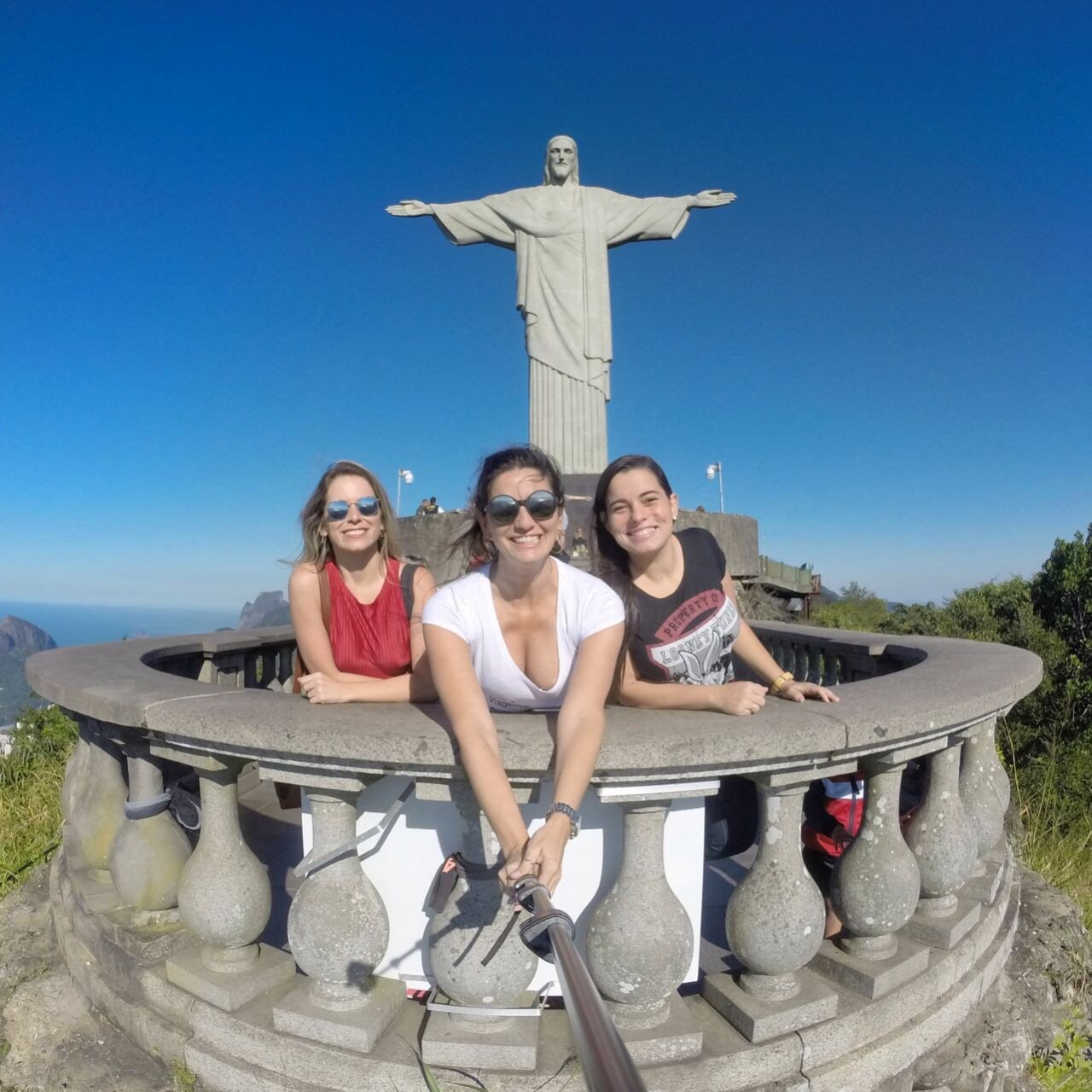
Personal photography and phone photography are permitted throughout the summit terraces and around the statue base at Christ the Redeemer. Tripods, monopods, selfie sticks with sharp metal points, and professional camera rigs with large lenses require prior authorization and are generally restricted during high-traffic hours to keep walkways clear. Drone flights are prohibited over the entire Corcovado summit and Tijuca National Park area.
Children of all ages can visit the Christ the Redeemer statue, and strollers are permitted as far as the elevator and escalator system allows before the final walking sections. The summit terrace can get crowded with school groups and families around midday, so younger children should be kept close on the narrower viewing platforms. There are restrooms and a small snack kiosk near the visitor center at the Paineiras base for family stops before or after the climb.
The Paineiras–Corcovado van route is the most accessible option, since it drops passengers close to a system of ramps, elevators, and escalators leading to the main viewing terrace beneath the statue. Wheelchair users and visitors with reduced mobility should request assistance when booking, as some sections near the summit still involve short flights of stairs. Accessible parking and priority boarding are available at the Paineiras visitor center for registered accessibility needs.
Food and drink are not permitted inside the van cabins or on the escalators and elevators leading to the summit terrace at Christ the Redeemer. Sealed bottled water may be carried up to the viewing platforms, but eating is restricted to the designated visitor center area near the Paineiras base. Picnicking on the summit terraces themselves is not allowed due to the limited space and heavy foot traffic.
Quiet before 9am
Opening hours
Daily 07:20–19:00, every day of the week
Opening hours
07:20 – 19:00
Getting there
City-center access via metro and bus
Accessibility
Most experiences are wheelchair-friendly — check individual tours
What to bring
Comfortable shoes, water, phone for mobile voucher
Public transport · 45-60 min · Metro fare plus van or train ticket
Take metro to Largo do Machado or Botafogo station, then transfer to an official Paineiras van or the Corcovado cog train from Cosme Velho; direct metro access to the summit does not exist.
Van tickets for Christ the Redeemer can typically be cancelled up to 24 hours before the scheduled time slot for a full refund; cancellations made after that window, or no-shows, are generally non-refundable. The adult van ticket itself is priced at 76 BRL per person in low season, and this figure does not change regardless of cancellation timing.
Recommended time
2-3 hours
Most people spend 2-3 hours at Corcovado once travel time is included, covering the shuttle up, the summit viewing platforms, and a slow walk back down for photos. Add 30-45 minutes if you plan to browse the small snack bar or wait out a cloud bank for a clear shot. Booking Christ The Redeemer Tickets for the first departure window keeps queue time low, since lines at the base can stretch long once mid-morning coach tours arrive. Anyone combining this with a broader Rio landmarks itinerary should budget the fuller half-day option instead of the quick visit.
Crowd levels through the day
Weather · crowds · average price — dots go green to amber to red as each metric rises.
Rio's dry season brings cooler temperatures around 18-25°C and clearer skies over Corcovado, though July sees heavier domestic tourist traffic during school holidays.
Official Paineiras van departure times sell out during winter school holidays and Carnival, so reserve a slot several days ahead.
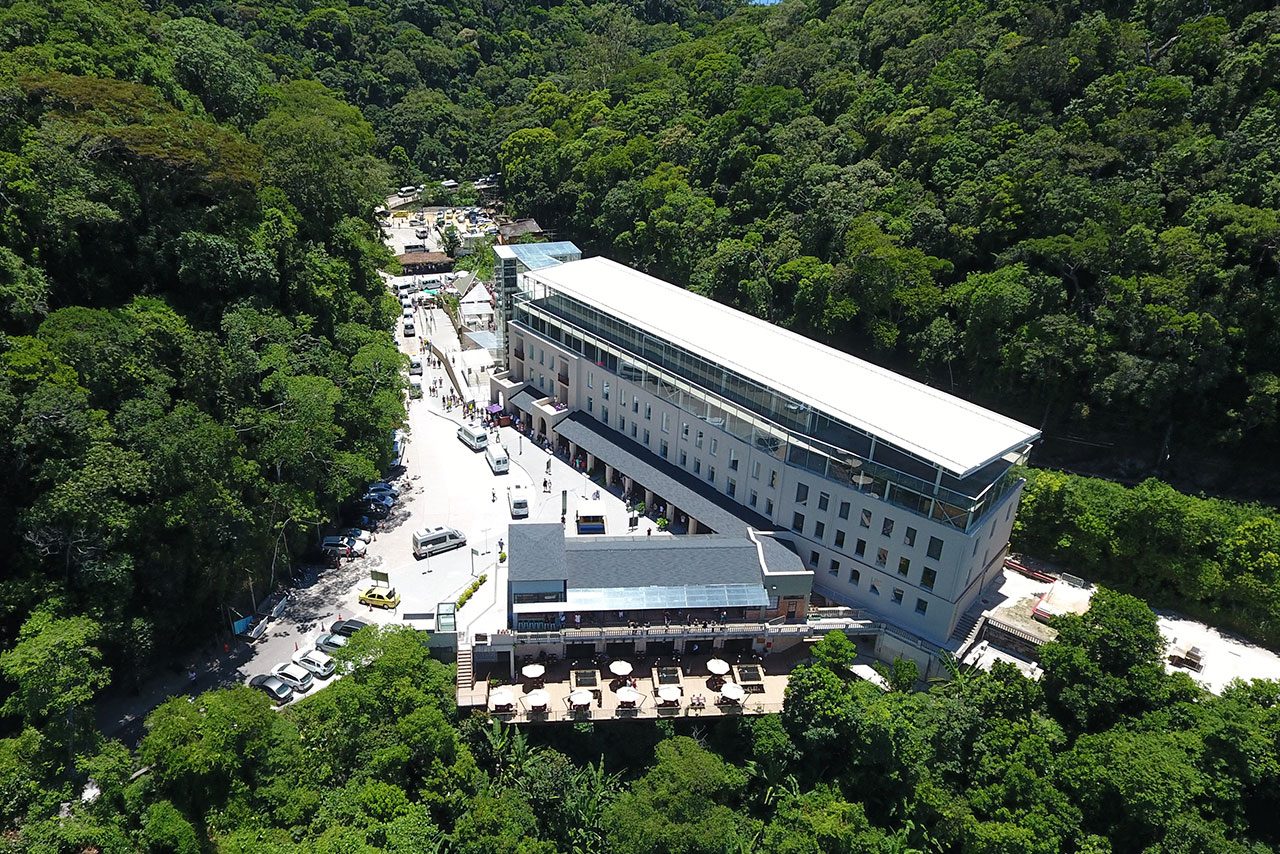
Estrada das Paineiras, S/N, Rio de Janeiro, RJ, 25730-411, Brazil
Main departure point for official vans up to the statue
Get directionsThe idea predates the statue by decades. In 1850, the Vincentian priest Pedro Maria Boss proposed a Christian monument on Corcovado to honour Princess Isabel. The plan died with the 1889 declaration of the Republic, which separated church from state. It returned in 1920, when the Catholic Circle of Rio launched a public subscription called the Monument Week. Parishioners across Brazil funded what would become the most recognised of all Rio de Janeiro landmarks, and the reason travellers still search for Christ The Redeemer Tickets today. The engineer Heitor da Silva Costa won the commission. His first sketch showed Christ holding a cross and a globe; critics mocked it. The artist Carlos Oswald then proposed the open-armed figure, its silhouette forming a cross against the sky. In Paris, the Polish-French sculptor Paul Landowski modelled the head and hands, while the Romanian engineer Gheorghe Leonida refined the face. Silva Costa chose reinforced concrete for the internal structure and, on the advice of his daughter, soapstone tiles from Minas Gerais for the outer skin. The stone resisted weathering and could bend around curves. Local women glued the tiles to fabric backing sheets, sometimes writing prayers on the reverse. Construction ran from 1926 to 1931 on a summit 710 metres above the bay, with materials hauled up the Corcovado rack railway opened in 1884. The finished figure stands 30 metres tall on an eight-metre pedestal, arms spanning 28 metres. It was inaugurated on 12 October 1931. Lightning has struck it repeatedly, damaging a thumb and the head in 2008 and a fingertip in 2014; a soapstone reserve is kept for repairs. Voted one of the New Seven Wonders in 2007, the statue sits within Tijuca National Park, inscribed by UNESCO in 2012 as part of the Rio de Janeiro carioca landscapes. Visitors booking Christ The Redeemer Tickets tours arrive by van or train through that same protected forest. A Corcovado summit tour reveals what postcards flatten: a monument built by subscription, sculpted in Paris, and clad in Brazilian stone.
Priest Pedro Maria Boss proposes a religious monument on Corcovado honouring Princess Isabel.
The Corcovado rack railway opens, later used to haul construction materials to the summit.
Brazil becomes a republic and separates church from state, shelving the monument plan.
The Catholic Circle of Rio launches Monument Week, raising public subscriptions for the statue.
Heitor da Silva Costa's design is revised and Paul Landowski begins modelling the head and hands in Paris.
Reinforced concrete construction proceeds, clad in soapstone tiles from Minas Gerais.
The 30-metre statue is inaugurated above Rio de Janeiro.
Named a New Seven Wonder, then included in the UNESCO carioca landscapes inscription.
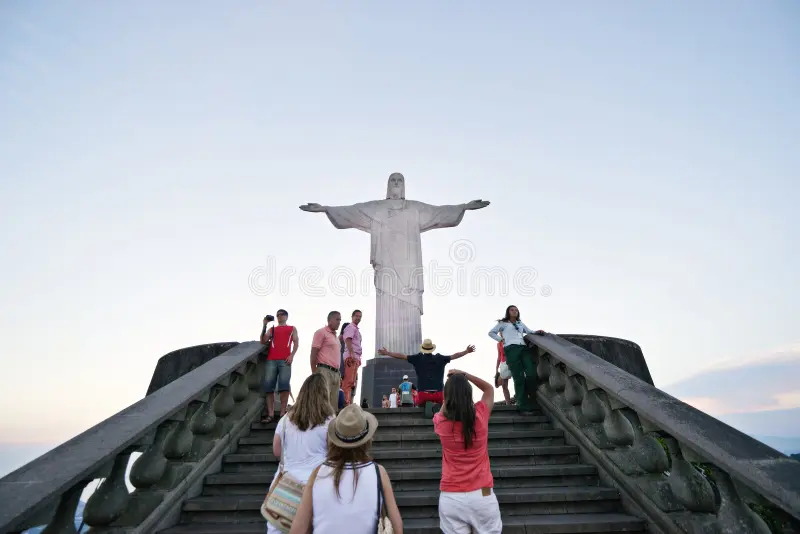
The classic pose spot: stand at the bottom of the staircase leading up to the statue while someone frames you looking up at Christ the Redeemer towering overhead. This is the most crowded angle at the summit, so patience is needed to get a clear shot.
Behind the statue, a terrace opens onto Sugarloaf Mountain and Guanabara Bay, giving a wide panoramic frame with the Christ Redeemer Tickets summit viewpoint on one side. It draws fewer people than the front stairs since most visitors head straight for the statue photo.
A raised ledge on the statue's right side gives an elevated, near-aerial angle showing the pedestal, the surrounding forest canopy, and the city sprawl below in one composition. It requires a short walk past the main platform and is less congested.
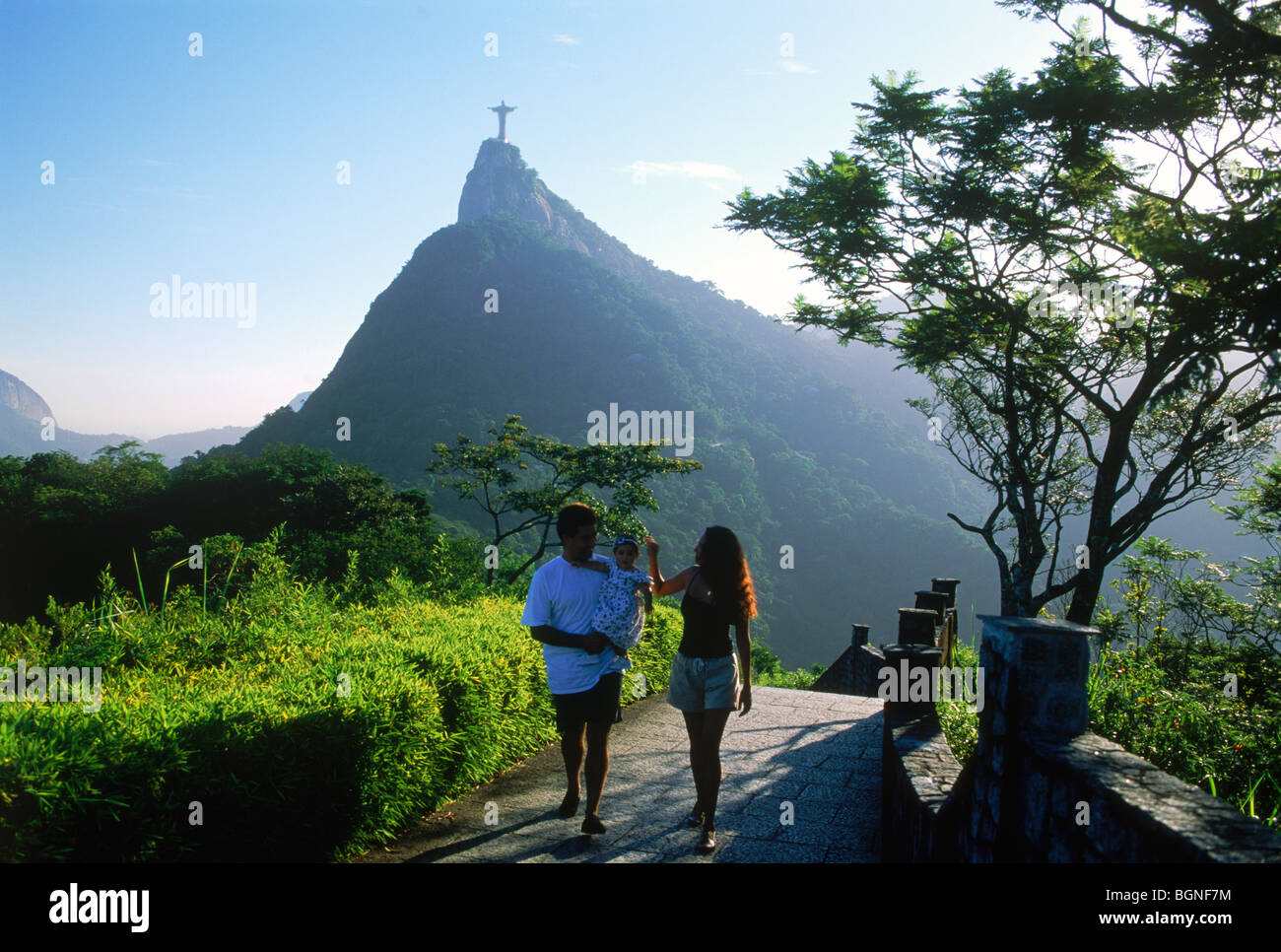
This roadside viewpoint on Corcovado's slopes frames the entire statue as a small distant figure atop the mountain, with Botafogo Bay and the city skyline spread beneath it, a favored angle for anyone planning Christ The Redeemer Tickets around a full-city panorama rather than a close-up. Two distinct viewing points exist here, a helipad platform and stairs leading to the main lookout.
Along the walkway leading up to the summit platform, gaps in the trees give a rising, front-on glimpse of the statue emerging above the ridge line, useful for a build-up shot before reaching the crowded top. It works well for both the escalator and stair approach routes.
Options at the summit are limited to a small snack bar, so most visitors buying Christ The Redeemer Tickets plan their real meal in Cosme Velho, the neighborhood at the base of Corcovado, or push on to bohemian Santa Teresa. It works well whether you're grabbing a quick bite before a Rio de Janeiro landmark tour or settling in afterward.
Basic sandwiches, coconut water and packaged snacks near the viewing platform. Convenient if hunger hits mid-visit, but choices are limited and prices reflect the captive location, so it suits a quick stop rather than a real meal.
A calm garden terrace in Cosme Velho known for light breakfasts, omelets and carefully brewed coffee. Good for a relaxed start before the Christ The Redeemer Tickets tour, and rarely overwhelmed even when the train queue outside gets busy.
Homemade falafel, kibe and lentil dishes near Praça São Judas Tadeu, popular with tourists heading to or from the train. Lunch service can fill up midday, so an early or late sitting is easier.
A small stop on Rua Cosme Velho for coffee and pão de queijo, handy for a fast bite before boarding for the summit. Best treated as a snack stop rather than a sit-down lunch.
Casual, home-style Brazilian cooking including feijoada, tucked beside the Casa do Minho social club near the train station. Quieter and less touristy, a solid fallback after descending from skip-the-line Christ The Redeemer access.
Real experiences from real travelers
We went up the Corcovado cog train early and the mist sat below us like a floor. By the time we reached the terrace the sun had burned through and Guanabara Bay opened up completely. Bring a light jacket, the summit is noticeably cooler than Copacabana
Photos do not convey the scale until you stand at the base of the soapstone plinth and look straight up. The arms seem to keep going. We had Christ The Redeemer Tickets sorted before arriving, which mattered because the terrace was already busy
The wind at the top of Corcovado was strong enough to make holding a phone steady difficult. Views over Tijuca Forest and toward Sugarloaf Mountain were clear, though a band of haze sat over Ipanema. Escalators from the drop-off point saved my knees
Arriving late in the afternoon meant warm light on the Art Deco mosaic tiles and far fewer people than midday. The Cristo Redentor looks almost gold at that hour. One of the Rio de Janeiro landmarks I would happily return to
Our skip-the-line Christ The Redeemer entry meant we walked past a long queue at the base station. The van route through Tijuca National Park is winding, so sit near the front if you get motion sick. The statue emerging above the treeline is a genuine moment
It poured for twenty minutes and everyone huddled under the terrace overhang. Then the cloud lifted and Sugarloaf appeared in full sun, which felt like a reward for waiting. Our Christ The Redeemer Tickets tours guide told us patience is standard on Corcovado
Booking the ingressos Cristo Redentor in advance online was simple and the QR code scanned without issue at the station. The forest ride up smells of wet earth and vegetation. Standing beneath the outstretched arms with the Atlantic behind you is quieter than I imagined
Midmorning on a Saturday meant shoulder to shoulder on the upper deck, and getting a clean photo took some patience. Still, the panorama across Lagoa Rodrigo de Freitas and out to the ocean is exceptional. A Christ The Redeemer Tickets tour with a guide who explained the statue's construction added a lot
Winter in Rio meant crisp air and unusually sharp visibility from the summit of Corcovado. The soapstone surface was warm under my hand even with the breeze. Our Christ The Redeemer Tickets tickets were emailed instantly and worked at both the train and the terrace
The drive through Tijuca Forest is half the experience, with vines and bromeliads pressing in on both sides. At the top, the statue's silhouette against the sky is unmistakable from anywhere in the city. Go on a weekday if you can
Everything you need to know for your journey
Christ the Redeemer and its official van access are open daily from 07:20 to 19:00, with no weekly closure day.
The adult van ticket including transport costs 76 BRL per person in low season for Christ The Redeemer Tickets.
Yes, the Paineiras van route connects to elevators and ramps leading to the main viewing terrace, though some short stair sections remain near the summit.
Large suitcases, tripods with sharp metal points, drones, and glass containers are among the items restricted at the security checkpoint before boarding the van.
Small daypacks are allowed on Christ The Redeemer Tickets tours, but oversized luggage is not permitted onboard the vans or at the summit.
Arriving during the 07:30–09:00 window offers thinner crowds and softer light before midday tour groups reach the summit.
There's no strict dress code, but comfortable shoes and a light jacket are recommended given the cooler, breezier conditions atop Corcovado.
Sealed bottled water is allowed on the terraces, but eating and open food are restricted to the visitor center area near the Paineiras base.
Visitors typically reach the Paineiras departure point by taxi, ride-share, or public bus before transferring to the official van for Christ The Redeemer Tickets.
Yes, children of all ages can join, and strollers are permitted as far as the elevator and escalator system allows.
Van tickets can generally be cancelled up to 24 hours in advance for a full refund; later cancellations or no-shows are typically non-refundable.
Parque Lage, the Tijuca National Park trails, and the Cosme Velho neighborhood all sit within a short drive of the Corcovado summit and combine well with a Rio de Janeiro landmarks itinerary.
A restored 19th-century mansion and gardens at the base of Corcovado, with trails leading toward Tijuca Forest.
A residential neighborhood at the mountain's base offering easy access to the cog train station and quieter, mid-range lodging options.
Join thousands of happy travelers who have discovered this incredible experience
Book Your Experience Now